
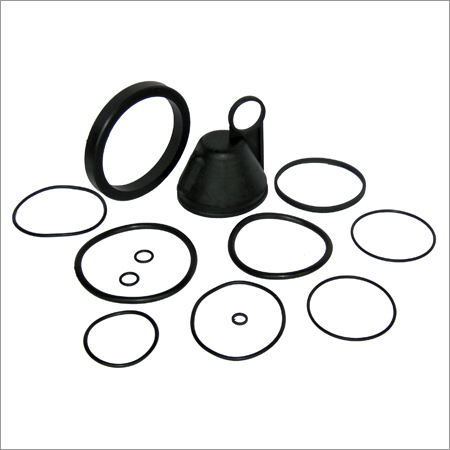
Automotive Rubber O Rings
Product Details:
- Standard ISO 3601 / DIN 3771
- Thickness 2 mm to 10 mm
- Tolerance 0.05 mm
- Material Nitrile Rubber (NBR), Silicone, EPDM, Viton
- Shape Round / Circular
- Function Sealing, Prevents leakage of fluids or gases
- Application Automobile Engines, Fuel Systems, Hydraulic Systems
- Click to View more
X
Automotive Rubber O Rings Price And Quantity
- 10 Piece
Automotive Rubber O Rings Product Specifications
- ISO 3601 / DIN 3771
- Automobile Engines, Fuel Systems, Hydraulic Systems
- 2 mm to 10 mm
- Sealing, Prevents leakage of fluids or gases
- Nitrile Rubber (NBR), Silicone, EPDM, Viton
- 0.05 mm
- Round / Circular
Automotive Rubber O Rings Trade Information
- Cheque, Cash Advance (CA)
- 1 Week
- Yes
- Contact us for information regarding our sample policy
- Box packing
- Australia, North America, Eastern Europe, Africa, Central America, Middle East, South America, Western Europe, Asia
- All India
- ISO 901:2015
Product Description
Automotive Rubber O Rings
Material- Rubber molded components have various application in automobiles,Engineering, industrial,medical instruments,tools and many more as many properties can be achieved in rubber components which are impossible with any one particular material. It can also be blend with plastics to give the advantage of both rubber and plastics.
Precision and Quality Standards
Our O-rings are produced in strict compliance with ISO 3601 and DIN 3771 specifications, ensuring consistent quality and mechanical properties. Each ring undergoes rigorous inspection for dimensional accuracy and material strength, giving clients peace of mind in critical automotive assemblies.
Versatile Material Options
Choose from Nitrile Rubber (NBR), Silicone, EPDM, or Viton, each tailored for unique performance requirements such as resistance to fuels, high temperatures, or aggressive chemicals. Our material diversity supports a wide range of automotive applications and environmental conditions.
Dependable Sealing Performance
Engineered to deliver leak-proof sealing in demanding fuel, engine, and hydraulic systems, our O-rings help maintain operational efficiency, reduce maintenance needs, and extend equipment lifespan, making them indispensable for automotive manufacturers and service providers.
FAQs of Automotive Rubber O Rings:
Q: How are your automotive rubber O-rings used in vehicle systems?
A: Our O-rings are primarily employed in automotive engines, fuel systems, and hydraulic assemblies, serving the crucial role of sealing joints and connections to prevent fluid or gas leakage, ensuring smooth and efficient operation.Q: What materials are these O-rings made from and how does each benefit automotive applications?
A: Our O-rings are available in Nitrile Rubber (NBR), Silicone, EPDM, and Viton. NBR is excellent for oil and fuel resistance, Silicone withstands high temperatures, EPDM offers superior weathering and ozone resistance, and Viton excels against aggressive chemicals and high heat.Q: When should O-rings be replaced in automotive systems?
A: O-rings should be replaced during regular maintenance or at the first signs of wear, such as deformation, cracking, or loss of elasticity. Timely replacement helps prevent leaks and maintain dependable performance in critical automotive systems.Q: Where can your O-rings be sourced, and do you offer international export?
A: As a distributor, exporter, and manufacturer based in India, we supply automotive O-rings both domestically and to international markets. Orders can be placed directly through our distribution channels for seamless delivery worldwide.Q: What is the process for ensuring the dimensional accuracy of these O-rings?
A: Our O-rings are manufactured with precise control, adhering to a thickness range of 2 mm to 10 mm and a strict tolerance of 0.05 mm. Each batch is thoroughly tested against ISO and DIN standards to ensure uniformity and performance.Q: How does the round shape of your O-rings enhance their sealing function?
A: The circular shape of our O-rings ensures even distribution of pressure when seated in grooves, enabling robust sealing against fluids or gases. This geometry guarantees reliability and efficiency in automotive joints and fittings.Tell us about your requirement

Price:
Quantity
Select Unit
- 50
- 100
- 200
- 250
- 500
- 1000+
Additional detail
Mobile number
Email

Other Products in 'Rubber O Rings' category


CROWN INTERNATIONAL
GST : 06BAAPS0983D1ZU
Contact Details

- Plot no - 183, Sector -59, Huda Industrial Area, Ballabgarh - 121004, Haryana, India

- Mr. Ashish (Proprietor)
- Mobile :08071931572
- Send Inquiry
 Send Inquiry
 Send Inquiry
 Send SMS
 Call Me Free
CROWN INTERNATIONAL
All Rights Reserved.(Terms of Use)
Developed and Managed by Infocom Network Private Limited.
Developed and Managed by Infocom Network Private Limited.
